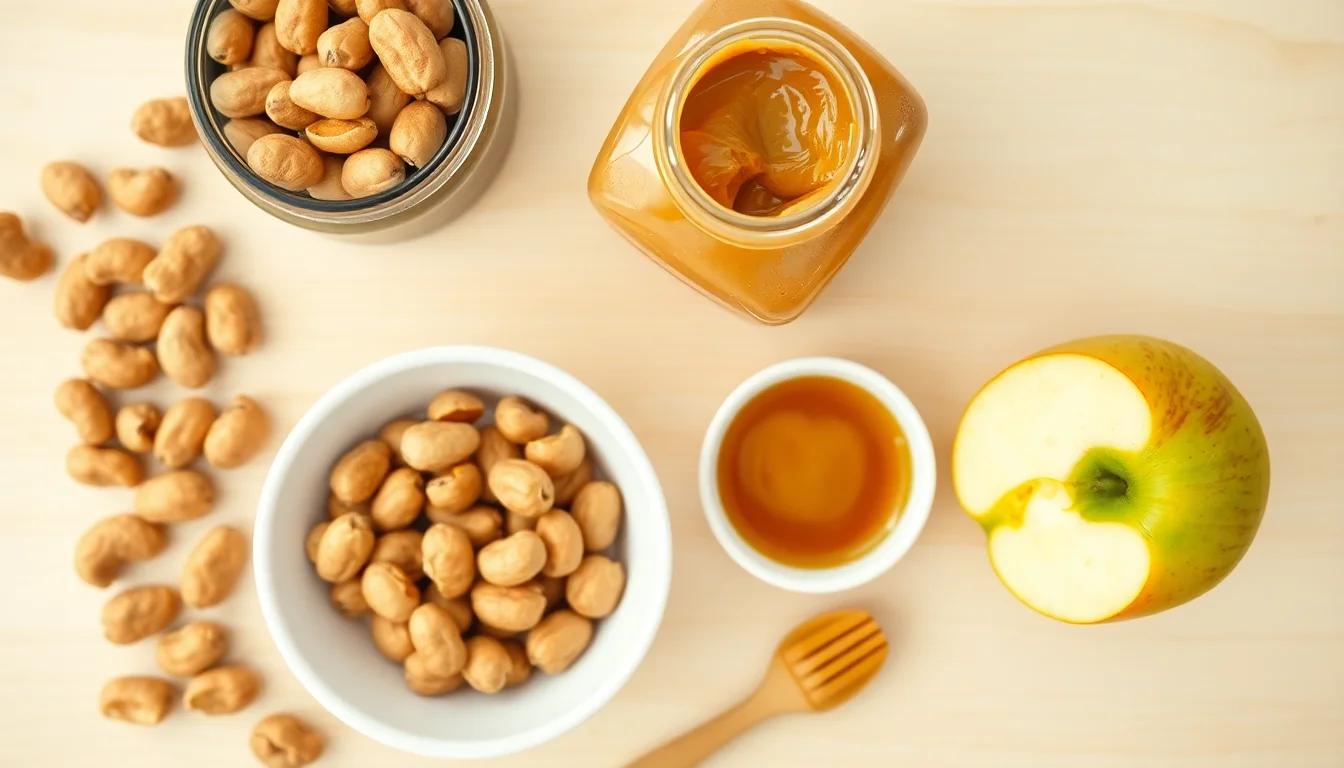

I spent a long time buying peanuts strictly as an ingredient — pounds and pounds of raw Spanish peanuts (a small-seeded variety that browns beautifully in a brittle pan) — without paying much attention to what was in them nutritionally. Then I started fielding questions from customers at farmers’ markets: Are these healthy? How much protein? My husband is doing keto — can he eat these? I realized I owed them a real answer, not a shrug. So I went back to the USDA data and actually read it. What I found surprised me in a good way. Peanuts are one of the most nutrient-dense snack foods you can buy by the pound, and most of the fear around them — that they’re “too fatty,” that they’re junk food, that they’re a legume so they must be off-limits — doesn’t hold up well against the numbers. Here’s what the data actually shows, in plain language.
What’s Actually in a Peanut? The Core Nutrition Numbers
Let’s start with a concrete serving. A one-ounce portion of dry-roasted peanuts — that’s roughly a small handful, about 28 grams or 39 individual peanuts — contains the following, according to USDA FoodData Central:
By the numbers (1 oz / 28g dry-roasted, unsalted peanuts):
| Nutrient | Amount |
|---|---|
| Calories | 166 |
| Total fat | 14 g |
| Protein | 7 g |
| Total carbohydrate | 6 g |
| Dietary fiber | 2.3 g |
| Net carbs (carbs minus fiber) | ~3.7 g |
That fat number — 14 grams — is the one that used to scare people. But here’s what matters: the overwhelming majority of the fat in peanuts is unsaturated fat, the kind that research associates with lower LDL (“bad”) cholesterol. About 50% of peanut fat is monounsaturated (the same category as olive oil), and roughly 30% is polyunsaturated. Saturated fat — the kind you actually want to watch — is only about 2 grams per ounce. The Harvard T.H. Chan School of Public Health puts peanuts in the same conversation as tree nuts when it comes to heart-healthy fat profiles, which is a meaningful endorsement given how much research sits behind that claim.
The protein number is also worth pausing on. Seven grams per ounce puts peanuts among the highest-protein snacks you can buy at a grocery store without entering the meat or dairy aisle. For context, a large egg has about 6 grams of protein. Peanuts beat it.
Fiber — 2.3 grams per ounce — matters because most Americans are chronically under-eating fiber. Fiber slows digestion, helps you feel full, and feeds the beneficial bacteria in your gut. It’s one of the reasons peanuts feel more satisfying than a comparable calorie hit from chips or crackers.
Are Peanuts Good for Weight Management?
This is the question underneath the question for a lot of people. The short version: yes, evidence leans that way, with one caveat.
The fat and protein combination in peanuts is satiating — meaning a small portion keeps you full longer than a low-fat, high-carb snack of the same calorie count. Studies consistently show that people who eat nuts regularly don’t tend to gain the weight you’d expect from the calorie density, partly because of satiety effects and partly because the body doesn’t absorb every calorie from whole peanuts with perfect efficiency. The FDA even issued a qualified health claim acknowledging the research connecting nut consumption to reduced risk of heart disease — that’s a high bar, because the FDA requires real evidence before it lets a manufacturer print anything like that on a label.
The caveat: “peanuts are healthy” does not mean “peanut products are always healthy.” Honey-roasted peanuts with added sugar, or commercial peanut butter loaded with hydrogenated oil and corn syrup, have a very different nutrition profile than plain roasted or raw peanuts. If you’re buying peanuts for health reasons, the ingredient label should say one thing: peanuts. Two ingredients at most if you want salt: peanuts, salt.
When I roast my own at home — and I do, in a 325°F oven for about 20 minutes — I know exactly what’s in them. That’s half the reason I started doing it. If you want to try it yourself, dry-roasted unsalted peanuts are a good no-work alternative, and organic raw peanuts in bulk give you the most control over the process.
Keto and Paleo: Where Do Peanuts Actually Land?
These two diet frameworks treat peanuts very differently, and I think it’s worth being honest about why.
Keto (ketogenic diet): Keto restricts carbohydrates to roughly 20–50 grams per day to push the body into a fat-burning metabolic state called ketosis. With about 3.7 grams of net carbs per ounce (that’s total carbohydrate minus fiber, since fiber isn’t digested the same way), peanuts are considered keto-compatible by most practitioners. You can eat a one- or two-ounce serving and barely dent your carb budget for the day. Peanut butter — plain, no added sugar — is a staple in a lot of keto meal plans for exactly this reason. The fat and protein content also fits keto’s macronutrient goals almost perfectly. Verdict: yes, peanuts generally work for keto.
Paleo diet: This is where it gets interesting. The paleo framework tries to approximate the diet of pre-agricultural humans, and peanuts are a legume — technically in the same botanical family as beans and lentils, not a true tree nut. Legumes require cultivation and contain compounds called lectins and phytic acid (sometimes called “antinutrients”) that paleo advocates argue the human gut wasn’t designed to process in large amounts. Most strict paleo templates exclude peanuts entirely for this reason. It’s not a toxicity concern — it’s a philosophical one about the food’s evolutionary relationship to humans. Verdict: peanuts are typically excluded from strict paleo, even though the nutritional profile would otherwise qualify.
If you’re doing a modified or “primal” version of paleo, a lot of people make an exception for peanuts because the practical evidence that small amounts cause harm is thin. But if you’re strict paleo and someone asks, be upfront: peanuts are a legume, not a nut, and that matters to the framework.
A Quick, Honest Word on Aflatoxin and Allergies
I’m not going to bury this, because you’ll run across it and I’d rather you hear it from me first in context.
Aflatoxin is a naturally occurring mold toxin (produced by certain Aspergillus fungi) that can develop on peanuts, especially if they’re stored in warm, humid conditions before or after harvest. The IARC classifies aflatoxin B1 as a Group 1 carcinogen — meaning there is sufficient evidence it causes cancer in humans at high doses. This sounds alarming out of context. In context: the U.S. has strict regulatory limits on aflatoxin in peanuts destined for human food (the FDA limit is 20 parts per billion), and commercial peanuts sold in the U.S. are routinely tested. The actual exposure from eating normal amounts of commercially processed American peanuts is extremely low. The risk is most significant in regions where peanuts are stored without climate control and testing infrastructure doesn’t exist. Buying from reputable U.S. suppliers — which is the whole point of this site — largely takes care of it. We have a deeper piece on aflatoxin if you want the full picture.
Peanut allergies are real, serious, and the most common food allergy in the United States. FARE estimates roughly 6 million Americans have a peanut allergy, including about 1 in 50 children. Reactions range from mild hives to anaphylaxis, which is life-threatening. If you’re cooking for others, hosting an event, or running a food business, you already know this — but it bears saying plainly. We cover cross-contamination and labeling obligations in a separate article. Everything here is written for people who can eat peanuts without issue.
What Kind of Peanuts Should You Buy for Nutritional Quality?
If health is a priority, here’s how the main forms rank in my honest opinion:
Raw peanuts have the most intact nutrient profile — nothing added, nothing removed. The downside is they need to be cooked before eating (roasting or boiling), and raw peanuts straight from the bag taste chalky and a little grassy. Raw peanuts in bulk are what you want if you’re making homemade peanut butter or roasting your own.
Dry-roasted, unsalted is my everyday recommendation for snacking. The roasting process causes minor losses of some heat-sensitive nutrients (certain B vitamins, for example), but nothing dramatic. The flavor is better than raw for eating out of hand, and without added oil, the fat content is essentially unchanged from natural. Hampton Farms dry-roasted unsalted peanuts are widely available and consistently good.
Oil-roasted peanuts add a small amount of oil (usually peanut or sunflower oil) during processing. The calorie increase is modest — maybe 5–10 calories per ounce — but not worth worrying about. The concern is really about added salt and any flavor coatings; check the label.
Peanut butter — natural, no additives (ingredients: peanuts, salt) is nutritionally very close to whole peanuts. The fiber content drops slightly because processing removes some of the skin. But as a delivery vehicle for protein and healthy fat, it’s excellent. Avoid the “peanut butter spread” products where the first added ingredient is sugar or palm oil.
Here’s What I’d Actually Buy
For everyday snacking and nutrition: a 1- or 2-pound bag of dry-roasted unsalted peanuts. Simple, widely available, honest ingredient list.
For homemade peanut butter or roasting your own: raw peanuts in a 5-lb bag gives you flexibility and the freshest starting point.
For keto snacking in bulk without the markup of “keto-branded” products: a 25-lb bag of dry-roasted unsalted Virginia peanuts from Virginia Diner or Whitley’s is genuinely one of the better values I’ve seen this year — you’re paying for peanuts, not packaging.
The bottom line: peanuts are dense with protein, heart-healthy fat, and fiber. They’re one of the most nutritionally efficient foods you can buy by the pound. Whether they fit your specific diet framework depends on which one you’re following — but for most people eating balanced, peanuts are a genuinely good food, not a compromise.