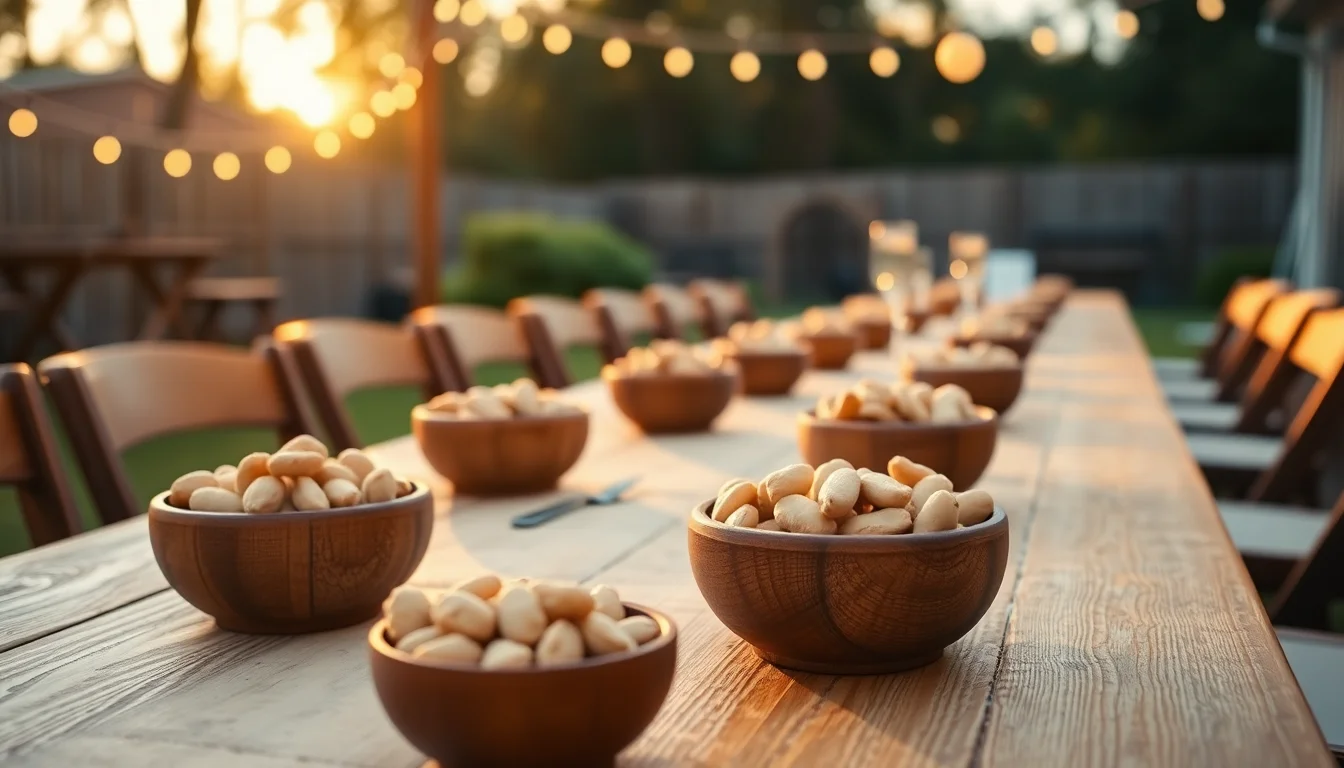

If you’ve never bought peanuts in bulk before — meaning more than a grocery-store jar — the first question that stops almost everyone is the same one: how many pounds do I actually need? Buy too few and you’re the host who ran out of snacks before the toasts were done. Buy too many and you’re eating peanuts out of a five-gallon bucket through October. I’ve been on both sides of that mistake.
This guide gives you a simple, event-by-event answer. No industry jargon, no guessing. I’ll explain the one term you need to know (in-shell versus shelled, which just means “still in the pod” versus “already peeled”), give you a per-guest table you can screenshot and take to your order form, and leave you with a clear recommendation for each situation. By the time you finish reading, you’ll know exactly what to type into a bulk-peanut retailer’s search bar.
The One Thing You Have to Understand Before You Order: In-Shell vs. Shelled
This trips up almost every first-time buyer, so let’s settle it fast.
In-shell peanuts are peanuts that still have their tan, papery shell — the pod — around them. Think of the peanuts in a baseball-park bag or a boiled-peanut pot. They’re sold by the pound including the shell, which means roughly half the weight you’re paying for is shell you’re going to throw away. A one-pound bag of in-shell peanuts yields about 6 to 7 ounces of actual peanut kernels.
Shelled peanuts (also called “kernels” in the industry) have already had that shell removed. What you’re paying for is almost entirely edible. A pound of shelled peanuts is a pound of peanuts.
Why does this matter for quantity planning? Because every per-guest estimate in this article is built around whichever form you’re serving. When I say “½ lb per guest in-shell,” I mean half a pound of those uncracked pods — not half a pound of kernels. Mixing these up is the single most common ordering mistake I see, and it usually ends with someone making an emergency trip to a warehouse store the day before an event.
Quick-Reference Table: How Many Pounds Per Guest by Event Type
Use this table as your starting point. I’ll explain the reasoning behind each number in the sections below.
| Event Type | Serving Style | In-Shell (lb/guest) | Shelled (lb/guest) | Notes |
|---|---|---|---|---|
| Cocktail hour snack | Bowl, self-serve | 0.25 lb | 0.12 lb | Light snacking alongside other food |
| Tailgate / backyard BBQ | Bowl or bucket, self-serve | 0.50 lb | 0.25 lb | Longer grazing window, heartier eaters |
| Boiled-peanut bar (main attraction) | Pot, scooped by staff or guest | 0.75–1.0 lb | N/A — always in-shell | Green or raw in-shell only; see note |
| Southern wedding peanut station | Display bowl, shelled + in-shell mix | 0.35 lb total | blend both | Decorative as much as edible |
| Fundraiser bag (pre-packed, sold) | Individual bags, 1 oz or 2 oz | Figure bags, not lbs — see below | — | Separate math; see Fundraiser section |
| Candy/brittle making station | Tasting demo at event | 0.10 lb shelled | 0.10 lb | Only a few kernels per taste |
A note on boiled peanuts: Boiled peanuts are always made from raw, in-shell peanuts — either “green” peanuts (freshly harvested, still moist, available August through October in the Southeast) or “raw” peanuts (dried but unroasted, available year-round). You cannot boil roasted peanuts. If you’re planning a boiled-peanut bar, make sure your order says “raw in-shell” or “green in-shell.” More on sourcing those in a moment.
Cocktail Hours and Casual Parties: The ¼-Pound Rule
For a cocktail hour or any event where peanuts are one of several snacks on the table — not the main event — plan on ¼ lb (4 oz) of in-shell peanuts per guest, or about 2 oz of shelled peanuts per guest.
Here’s the mental model: a standard 1-oz single-serve snack bag from a gas station holds roughly 28 peanut kernels. At a cocktail hour, most guests grab two or three small handfuls over the course of an hour. That’s about 1.5 to 2 oz of kernels, or 3 to 4 oz in-shell including the pods.
I round up to 4 oz in-shell (¼ lb) to account for the guest who treats every snack bowl like a personal reserve, and to make the math clean.
Example: 120-guest cocktail reception → 120 × 0.25 lb = 30 lbs in-shell. At current (May 2026) bulk pricing, a 25-lb bag of in-shell roasted peanuts from a source like Hampton Farms or Aldridge Peanuts runs roughly $35–$50 delivered, so you’re looking at two bags and about $80–$100 total for a crowd that size. That’s genuinely one of the most cost-effective crowd snacks you can buy.
Tailgates, BBQs, and Long Afternoon Events: Double It
Any event that runs more than two hours, involves outdoor activity, or doesn’t have a full meal attached should use the ½-lb in-shell rule (about ¼ lb shelled). People eat more when they’re standing, talking, and drinking for a long stretch.
I’ve catered a few backyard BBQs where I thought the ¼-lb estimate would hold because we also had ribs and sides. It didn’t. Peanuts disappear faster than almost any other snack because the act of shelling them is entertaining — people shell and eat almost without noticing.
The National Peanut Board notes that Americans consume more than 700 million pounds of peanuts annually, a number that reflects just how naturally snackable they are. Trust the data. Bring extra.
Boiled-Peanut Bars: The Most Common Wedding Math Mistake
If you’re planning a boiled-peanut bar for a Southern wedding or rehearsal dinner — one of my favorite wedding additions, and deeply underrated — budget ¾ to 1 full pound of raw in-shell peanuts per guest before boiling.
Here’s why the number is bigger than you’d expect: peanuts absorb water as they boil (typically 2–4 hours in salted water, sometimes with Cajun seasoning), and they gain weight significantly — roughly 25–35% heavier after cooking, according to standard food service estimates. But the yield in terms of servings is what matters, and a boiled peanut is a much more filling, satisfying snack than a roasted one. Guests eat more volume but get fuller faster.
The practical breakdown:
- 100 guests at a wedding peanut bar: 80–100 lbs raw in-shell peanuts
- At current bulk pricing (Spring 2026), raw in-shell peanuts run approximately $1.00–$1.50/lb from wholesale suppliers like Aldridge Peanuts in Virginia
- Total ingredient cost for 100 guests: roughly $80–$150, before salt, seasoning, and equipment
That’s an extraordinarily affordable wedding station. The biggest cost is often renting or borrowing the propane burners and stockpots.
One firm rule: for boiled peanuts, you want raw or green in-shell peanuts only. The USDA Agricultural Marketing Service grading standards define “raw” as dried but unroasted — exactly what you need. Roasted peanuts will turn to mush in a boil. If you’re ordering in summer or early fall, ask specifically about “green peanuts” (freshly dug, not yet dried), which produce a creamier boiled peanut that most Southerners consider the gold standard. Green peanut season in the U.S. runs roughly August through October, depending on the harvest in North Carolina, Virginia, and Georgia.
Fundraiser Bags: Think in Bags, Not Pounds
Fundraiser math is a little different, because you’re not serving peanuts — you’re selling pre-packaged bags. The question isn’t “how many pounds per guest” but “how many bags do I need, and what pack size should I order?”
Standard fundraiser bag sizes are 1 oz, 2 oz, and sometimes 4 oz. Church groups and school PTAs most commonly sell 2-oz bags because they’re substantial enough to feel like a real product but cheap enough to price at $1–$2 each and still make a margin.
A quick margin example:
- A 25-lb case of roasted in-shell peanuts contains roughly 400 individual 1-oz servings, or 200 individual 2-oz servings
- At $45/case wholesale (a typical Spring 2026 price from a source like Hampton Farms), your ingredient cost per 2-oz bag is about $0.225
- Sell each bag for $1.50 and your gross margin per bag is roughly $1.28 — about 85%
That’s before bags, labels, and labor. But the economics are genuinely strong, which is why peanut fundraisers have been a church-and-school staple for decades. For more detail on running the whole program — including supplier contacts that have formal fundraiser programs — see our Fundraiser Bag Planner (link to companion article).
A note on pre-packed vs. bulk: some suppliers, including Virginia Diner and Whitley’s, sell pre-packaged individual bags at wholesale quantities. If your group doesn’t want to handle a heat-sealer and printed labels, buying pre-packaged in case quantities is worth the slightly higher per-unit cost for the time it saves.
Here’s What I’d Actually Order
Let me make this concrete, because that’s the whole point.
Cocktail hour, 50–75 guests: One 25-lb bag of roasted in-shell peanuts. Done. You’ll have a little left over for the next day, and leftovers are never a problem with peanuts.
Backyard BBQ or tailgate, 50 guests: Two 25-lb bags of roasted in-shell. Budget $70–$100 total. Hampton Farms and Aldridge both sell 25-lb bags that ship reliably; check current pricing via the affiliate links below.
Southern wedding boiled-peanut bar, 100 guests: 80–100 lbs of raw in-shell peanuts. Order a 50-lb bag and a second 25–50-lb bag so you have flexibility. Source from a regional supplier that carries raw (unroasted) peanuts — not every retailer stocks them year-round. If your wedding is August through October, specifically ask for green peanuts; call ahead because they sell out fast.
PTA or church fundraiser: Start with one case (25 lbs) as a pilot. Pre-sell bags before you order so you know your demand. If you’re confident in a larger run, 50–100 lbs is a standard first-time fundraiser quantity for a group of 20–30 volunteers selling for 2–3 weeks.
Sam Mendoza has operated a small confectionery and catering business in the Southeast for over a decade and writes about bulk peanut sourcing, candy making, and event planning for PeanutsDirect.com. Retailer links in this article include affiliate relationships; we only recommend sources we’ve personally ordered from or verified through current pricing research.