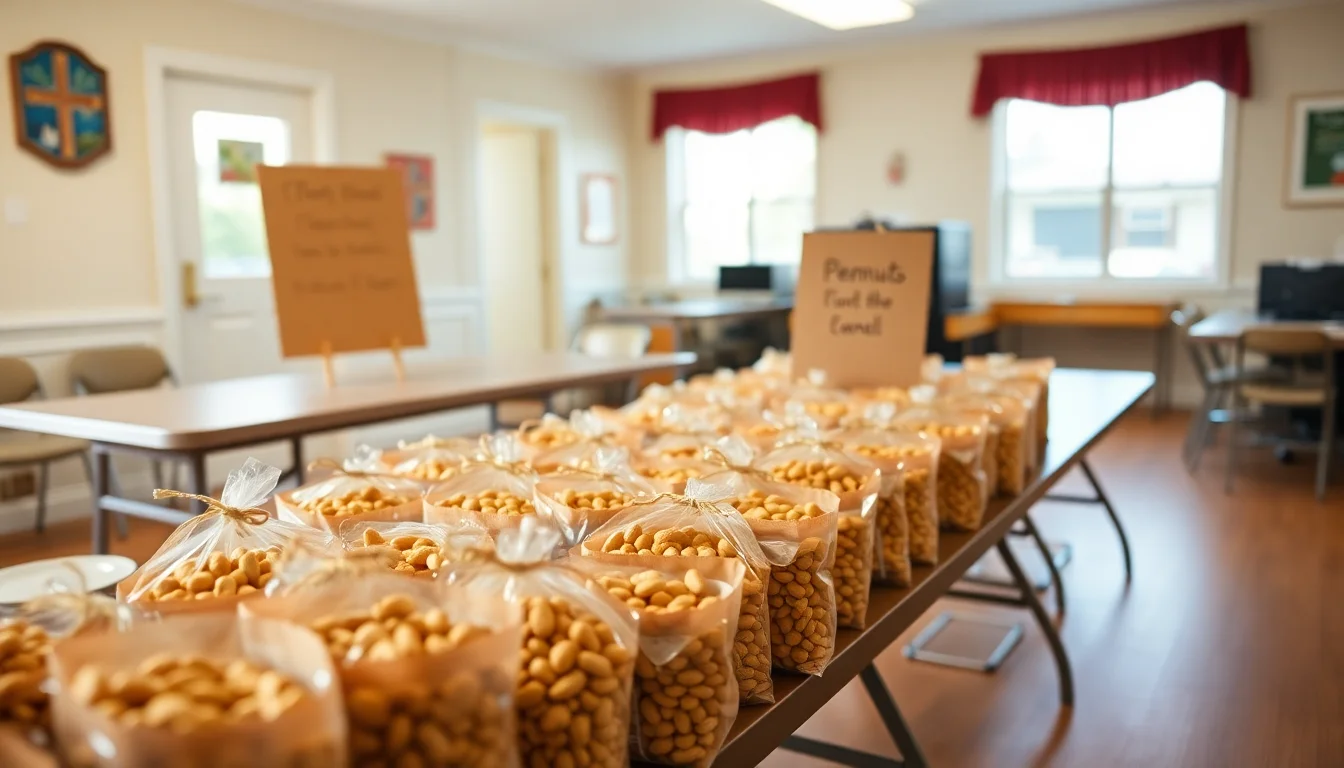
Running a peanut fundraiser is exactly what it sounds like: your organization — a school PTA, a church, a sports booster club — buys peanuts in bulk (meaning large quantities at a lower per-unit cost) and resells them in smaller bags at a markup, keeping the difference as profit. It sounds simple, and when the numbers line up, it genuinely is. The catch is that most groups either over-order and get stuck with inventory, under-order and leave money on the table, or choose a supplier without understanding what they’re actually paying for shipping, minimums, and bag sizes. This guide is going to fix all three problems. By the end, you’ll know exactly how many bags to order for your specific group size, what realistic margins look like right now in 2026, which supplier programs are actually set up for fundraisers, and what sells versus what sits on the table.
The Margin Math: What You Actually Keep
Let’s start here, because this is the decision everything else flows from.
A well-run peanut fundraiser in 2026 typically lands in this range:
By the numbers — one realistic fundraiser scenario:
| Item | Per Bag |
|---|---|
| Wholesale cost (1-lb bag, roasted salted Virginia) | ~$2.00–$2.40 |
| Suggested retail sell price | $5.00 |
| Gross margin per bag | $2.60–$3.00 |
| Margin percentage | 52–60% |
That margin is real, and it’s why peanut fundraisers have been a staple of PTAs and church groups for decades — they outperform many candy-bar programs on a per-unit basis. But the gross margin is not your net margin. You have to subtract shipping, any upfront design or printing costs for order forms, and the cost of any unsold inventory. A group that orders 300 bags and sells 240 has effectively paid full price for 60 bags and killed about $120–$150 of margin. That’s why presale is almost always the smarter model (more on that below).
On the cost side: in spring 2026, wholesale 1-lb bags of roasted, seasoned peanuts from established fundraising suppliers are landing in the $1.80–$2.50 range depending on variety, flavor, and whether you’re buying a case of 12 or a full pallet. Virginia-type peanuts (the large, sweet variety grown in Virginia and the Carolinas — often considered the premium snacking peanut) tend to run $0.30–$0.50 more per bag than Spanish or Runner types. Flavored varieties (honey roasted, Cajun, cinnamon) typically cost more and sell faster at events, which can justify the premium.
Presale vs. Storefront: Which Model Fits Your Group
This is the first real fork in the road, and it matters more than most groups realize before they’ve done one of these.
Presale (take orders first, then buy) is lower risk and the right choice for most first-time fundraisers. Volunteers collect orders and payment in advance — usually over two to three weeks using a printed or digital order form — then you place one consolidated order to your supplier. You only buy what you’ve already sold. Your margin is predictable, your inventory risk is near zero, and you don’t need refrigeration or storage space. The downside: it requires coordination, a clean order form, and a hard cutoff date. Impulse buyers who might have grabbed a bag at a table won’t participate.
Storefront or event-table selling (buy inventory, sell at a game, fair, or church event) can generate higher total sales if your foot traffic is good, but it introduces inventory risk. You’re betting on attendance and impulse. If you have a well-attended annual event — a fall festival, a football playoff night, a Sunday after service when the whole congregation is milling around — this model can crush it. If attendance is unpredictable, presale is safer.
Hybrid approach: Many experienced booster clubs run presale for three weeks, then buy 10–15% extra to sell at a single event table. That 10–15% buffer handles stragglers and generates a little bonus revenue without creating a storage problem.
How Many Bags to Order: The Fundraiser Bag Planner
Here’s the framework. Plug in your own numbers.
Step 1 — Count your sellers. How many students, members, or volunteers will actively be selling? Be conservative. In a school of 400 families, maybe 120 families will actually participate.
Step 2 — Estimate bags per seller. A realistic average is 8–12 bags per active seller for a two-to-three week presale. Your highest performers will sell 20–30; many will sell 5–6. Use 8 as your conservative planning number.
Step 3 — Do the math.
- 120 active sellers × 8 bags = 960 bags
- At $5 retail and $2.20 cost: gross profit ≈ $2,688
- Subtract estimated shipping ($80–$120 on a 960-bag order): net ~$2,570–$2,608
Step 4 — Apply the buffer. If you’re doing any event-table selling, add 10–15% to your presale total. Round up to a case-even number (most suppliers pack 12 or 24 per case) to avoid partial-case pricing penalties.
Step 5 — Confirm the minimum. Most fundraising programs have a case minimum (typically 10–25 cases). Virginia Diner’s fundraising program, for example, requires a minimum order — check their current terms directly, as minimums and pricing update seasonally. Aldridge Peanuts offers wholesale pricing that scales with volume and works with fundraising groups on custom pack configurations.
Supplier Programs Worth Knowing
Not every peanut seller is set up to work with fundraisers. You want a supplier that offers: (1) pre-portioned retail-ready bags, ideally already labeled and sized for hand-to-hand selling; (2) case pricing with clear per-bag cost; (3) reliable shipping timelines; and (4) ideally some form of fundraiser support — an order form template, a fundraising FAQ, or a dedicated contact.
Virginia Diner (Wakefield, Virginia) is one of the most established names in this space. They offer a formal fundraising program with tiered pricing, flavor variety, and bags that are already retail-packaged and gift-quality — which helps at the $5 price point because the product looks like something worth $5. Their Virginia-type peanuts are widely regarded as premium. Shipping from Virginia is cost-effective for East Coast groups; Midwest and West Coast groups should run the shipping math carefully before committing.
Aldridge Peanuts (based in Alabama) is a strong alternative, particularly for groups in the South or Midwest. Aldridge handles wholesale and bulk orders and has experience working with organizations. Their pricing tends to be competitive on larger orders. Worth a direct call to discuss your volume — they’re a family operation and responsive.
Hampton Farms is the largest peanut brand in the U.S. and sells through major retailers, but their bulk and wholesale channel is less oriented toward small fundraiser programs. They’re worth knowing about for groups buying at higher volumes (pallet-scale) or who want product available through a distributor relationship.
A note on Amazon: you can source peanut bags through Amazon, and for small pilots (under 5 cases), the per-bag math sometimes works out fine. But for anything above that, you’re almost certainly overpaying versus a direct supplier relationship, and you lose the fundraiser-program support that makes order management easier.
What Actually Sells (and What Sits There)
After talking to PTA chairs, church deacons, and booster-club treasurers who’ve run these, a clear pattern emerges:
Honey roasted and lightly salted Virginia-type peanuts are the consistent top sellers. They’re approachable, they don’t require explanation, and the flavor profile reads as a treat rather than a commodity snack. Families who buy them as gifts — and a meaningful share of presale buyers are buying for a grandmother or neighbor — want something that looks and tastes like a gift.
Cajun-flavored peanuts sell well at events with food and beer, less well in school settings. Know your audience.
In-shell roasted peanuts are trickier for presale fundraisers because they’re bulkier, feel less gift-ready, and create shell-disposal logistics at events. They work great at a boiled-peanut bar or a baseball-night table setup but are not the default choice for a bag-in-the-hands fundraiser.
Variety packs (2 or 3 flavors bundled) tend to sell at a higher price point — $8–$10 — and can increase your per-transaction revenue with less sales effort. If your supplier can build them, worth testing.
What sits: Unseasoned raw peanuts, overly novelty flavors (pickle, dill, etc.), and anything in packaging that looks industrial rather than gift-ready. The buyer is paying $5 for a snack they could buy at a gas station for $2 — the premium has to be visible.
Order Form, Logistics, and Getting Paid
The order form is where most groups lose money silently. Unclear forms create incorrect orders; incorrect orders create disputes, short-shipments, and damaged trust with sellers.
A clean order form has: seller name and contact, buyer name and contact, product name(s) exactly as labeled, quantity per flavor, unit price, total, and payment collected (cash or check, or a link to a Venmo/PayPal if your group uses that). Keep it one page. We have a downloadable order form PDF — drop your email and we’ll send it straight to your inbox.
Payment collection: Collect payment at the time of order, not at delivery. This is non-negotiable if you want to avoid chasing people down three weeks later. The presale model only works if you have the cash in hand before you place the supplier order.
Delivery timeline: Most fundraising suppliers need 10–14 days from order to delivery. Build your presale window (2–3 weeks) and delivery buffer (2 weeks) into your calendar. A fundraiser with a hard event date — a spring carnival, an end-of-year meeting — should be placing the supplier order no later than four weeks before that date.
Here’s What We’d Actually Do
If you’re running your first peanut fundraiser with a school or church group of 200–500 families, here’s the call: run a two-week presale, use Virginia Diner’s fundraising program for the product quality and retail-ready packaging, price at $5/bag, and order one honey-roasted and one lightly-salted SKU as your two options. Keep it simple. A confused buyer doesn’t buy.
If your group is larger (500+ families), or you want to build an annual program with real margin discipline, call Aldridge directly, explain your volume, and ask about annual pricing — you’ll likely do better per-bag than any catalog price, and you’ll have a relationship for next year.
Run the presale. Collect money upfront. Don’t over-order. And if you have a big event date, buy a 10% buffer to sell at the table. That’s the whole playbook — and it works.