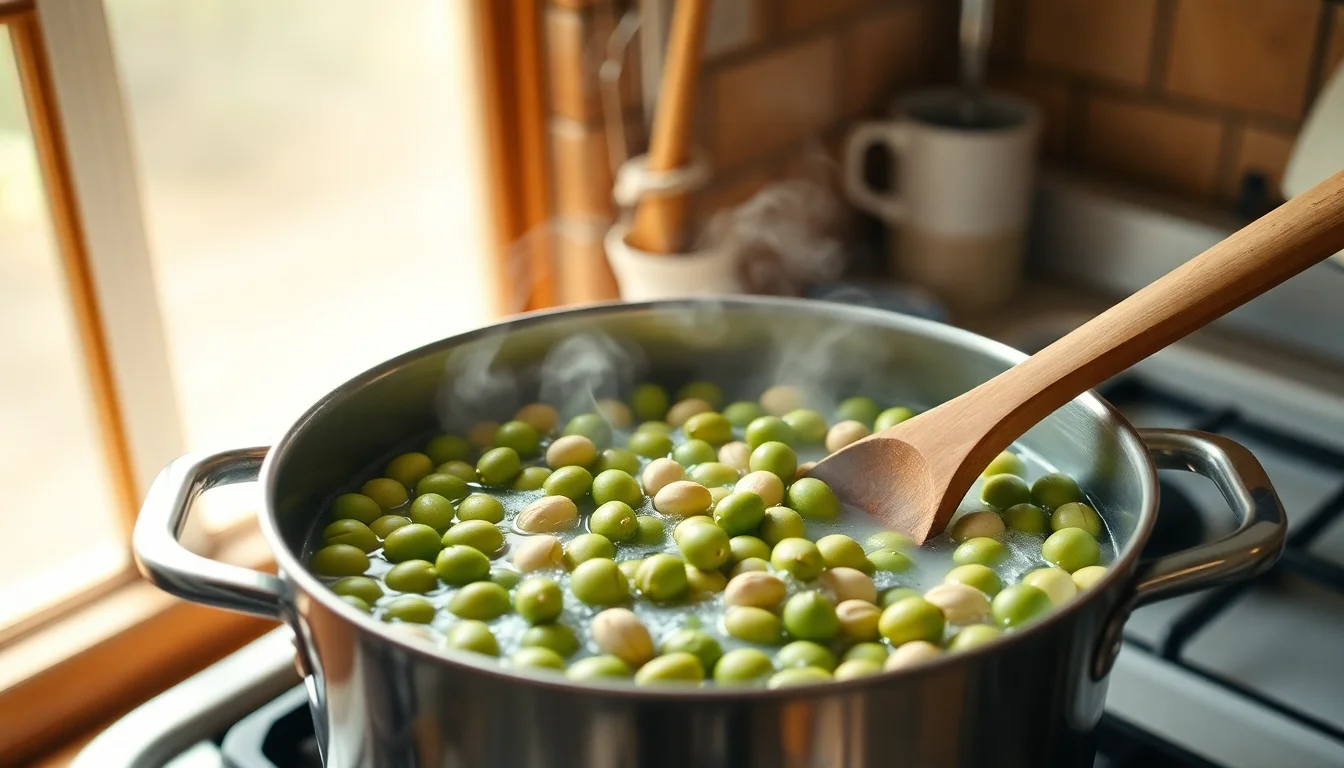

If you’ve never had a boiled peanut before, here’s the simplest way I can describe it: imagine a peanut that got halfway to becoming a bean. The shell softens in salted water, the nut inside turns tender and almost creamy, and the whole thing soaks up flavor the way dried pasta soaks up sauce. It’s a roadside staple across the South, sold out of steaming pots at farm stands and gas stations from Virginia down to Georgia — and it’s genuinely one of the easiest things you can make at home once you understand one key decision: which type of peanut to start with. This article will walk you through that choice, give you exact brine ratios (brine just means your salt-and-water cooking liquid), and lay out three flavor variations you can try on your first batch. Whether you picked up a bag of peanuts at a farm stand or you’re ordering online for the first time, you’ll leave here knowing exactly what to do.
Green Peanuts vs. Raw Peanuts — The Decision That Changes Everything
This is the one thing that trips up almost everyone the first time, so let’s settle it before anything else.
Green peanuts are freshly dug peanuts that haven’t been dried. They still carry a lot of moisture — sometimes up to 35–50% water content, according to the National Peanut Board. They look damp, feel heavy, and smell faintly grassy. You can only get them during harvest season, typically late August through October, from farm stands, roadside sellers, or a handful of online suppliers who ship them fast. The cooking window is short — they go bad within a week unrefrigerated — and the payoff is huge: green peanuts cook faster and absorb brine more completely than anything else. If you’ve ever had a perfect roadside boiled peanut, there’s a strong chance it started green.
Raw peanuts are the same thing, just dried. The moisture has been pulled out so they can sit on a shelf for months. Most of what you’ll find in grocery stores or order in bulk online is raw and dried. They’re available year-round, they’re stable, and they work perfectly well for boiling — they just take longer to cook and need a little more patience with the brine.
Quick rule of thumb: Green peanuts = faster cook, softer texture, seasonal. Raw dried peanuts = longer cook, still excellent, available any time.
A third term you’ll sometimes see is “fresh-crop” peanuts, which just means dried peanuts from the most recent harvest year (typically the fall prior). Fresh-crop raw peanuts hydrate faster and taste cleaner than peanuts that have been sitting in storage for 18 months. For boiling, fresh-crop is worth seeking out if you have the option — suppliers like Aldridge Peanuts and Hampton Farms typically note harvest year on their bulk listings.
What size peanut to buy? For boiling, you want Jumbo Virginia or large Runner peanuts (those are two of the four main commercial types — USDA grades them by size and variety). The bigger the nut, the more brine it absorbs and the more satisfying the eating experience. Avoid “fancy” or “extra-large” designations if they come with a significant price premium — regular jumbos are perfectly good. For online sourcing right now (May 2026), expect to pay roughly $2.50–$3.50/lb for raw jumbo Virginias in 10–25 lb bags, shipped. Green peanuts during season (August–October) typically run $1.50–$2.50/lb from farm-direct suppliers before shipping.
The Brine: How Much Salt, and Why It Matters
The brine is just salted water, but the ratio matters more than most people expect. Too little salt and the peanuts taste flat. Too much and they’re inedible. The texture is also affected — salt draws moisture in and out during cooking, which is part of how the nut gets that soft, creamy interior.
By the Numbers
| Peanut Type | Water | Salt | Cook Time (stovetop) |
|---|---|---|---|
| Green (fresh-dug) | 1 gallon | ½–¾ cup table salt | 2–4 hours |
| Raw dried (small/medium) | 1 gallon | ½–¾ cup table salt | 5–7 hours |
| Raw dried (jumbo Virginia) | 1 gallon | ¾–1 cup table salt | 6–9 hours |
Use a large stock pot — peanuts float, so you need volume and a weighted lid or plate to keep them submerged. The University of Georgia Cooperative Extension, which has published extensively on home peanut preparation, recommends keeping peanuts covered throughout cooking for even brine penetration.
How to know when they’re done: Pull one out, let it cool for 30 seconds, crack it open, and eat it. It should be soft all the way through — no crunch, no hard center. The texture people are going for is somewhere between a cooked bean and a firm grape. If there’s any resistance in the nut itself, you need more time. Don’t rush this. The biggest mistake beginners make is pulling the pot too early.
One technique I learned after ruining two batches: let the peanuts soak in cold water for 30 minutes before you start cooking. It helps rehydrate the outer shell slightly and gives you a more even cook. Not required, just helpful.
Three Flavor Variations
1. Classic Southern Salted
This is the baseline. Salt water, peanuts, heat, time. No tricks.
- 1 lb raw peanuts (in-shell)
- 1 gallon water
- ½–¾ cup table salt or kosher salt (kosher dissolves cleaner, but table salt works fine)
Combine everything in a large pot. Bring to a boil, then reduce to a steady simmer. Keep peanuts submerged. Cook until tender (see timing table above). Drain, eat warm. That’s it.
The Southern tradition here goes back generations — boiled peanuts were originally a harvest-time food, a way to eat fresh-dug peanuts before they were dried and stored. NC State Extension’s documentation on green peanut handling notes the practice dates to at least the Civil War era in the Carolinas.
2. Cajun Spiced
This is what most people mean when they order “Cajun boiled peanuts” at a roadside stand. The heat builds slowly — it’s not a punch in the face, it’s a slow warm that lingers.
To your basic brine, add:
- 2–3 tablespoons Cajun seasoning (Zatarain’s is widely available and works well)
- 1 tablespoon red pepper flakes (or more — this is personal)
- 4–6 cloves garlic, smashed
- 1 tablespoon smoked paprika (optional, adds depth)
- 1–2 dried cayenne peppers if you want genuine heat
Add everything at the start. The spices need the full cooking time to infuse the nut. Don’t add them at the end — that just flavors the shell and not the peanut itself.
3. Old Bay and Garlic (a Mid-Atlantic riff)
If you grew up closer to the Chesapeake than the Gulf, this one feels like home. Same structure as Cajun, but swap the seasoning:
- 3–4 tablespoons Old Bay seasoning
- 6–8 cloves garlic, crushed
- 1 tablespoon cider vinegar (optional — brightens it slightly)
- Salt reduced to about ½ cup since Old Bay is already salty
This variation works especially well with jumbo Virginia peanuts, which have a slightly sweeter, creamier flavor to begin with.
Stovetop vs. Slow Cooker vs. Instant Pot
You have three realistic options, and they all work. Here’s how to choose.
Stovetop is the traditional method and gives you the most control. You can check doneness whenever you want, adjust seasoning mid-cook, and the low simmer over hours creates a deeply flavored brine. The downside is you need to be around the house. Plan for 5–9 hours on raw peanuts.
Slow cooker (Crockpot) is my personal favorite for raw dried peanuts. Set it, forget it, come back 12–18 hours later. The longer the better, honestly. I’ll often load mine the night before a gathering and wake up to a pot that smells like a Southern gas station in the best possible way. Use the same brine ratios. Cook on LOW. Don’t use HIGH — the rapid boil can make shells fall apart.
Instant Pot (pressure cooker) is the speed option. Green peanuts: about 45–60 minutes on high pressure, then natural release. Raw dried peanuts: 75–90 minutes on high pressure, natural release. The texture is slightly different — a little denser than slow-cooked — but it’s genuinely good and perfect when you’re on a tight timeline. A few notes from experience: use at least 6 cups of water per pound of peanuts in the Instant Pot, and make sure your sealing ring doesn’t carry the smell from previous batches (peanut brine is pungent and will haunt a rubber gasket).
Storage and How Long They Keep
Boiled peanuts are perishable in a way that roasted peanuts aren’t. Once cooked:
- Room temperature: Fine for a few hours if you’re serving at a party or tailgate. Not longer.
- Refrigerator: Keep in their brine in a covered container, up to 1 week.
- Freezer: Boiled peanuts freeze remarkably well. Bag them in their brine, freeze up to 6 months. Reheat in the microwave or a quick pot of simmering water. The texture holds up better than you’d expect. According to the National Peanut Board’s cooking guidance, freezing is the recommended method for preserving a large green-peanut harvest for off-season use — and it’s genuinely how a lot of Southern families stock up in October.
What We’d Actually Buy
If you’re making your first batch right now (May 2026, well outside green peanut season), go with raw in-shell jumbo Virginia peanuts from a reputable bulk shipper. My current picks:
- Hampton Farms 25-lb raw in-shell — consistent quality, widely available, fair price around $55–$65 shipped depending on the retailer. Good for a first large batch or a small party.
- Aldridge Peanuts (direct) — a family operation in Suffolk, Virginia, with reliable fresh-crop stock and good customer service if you call and ask what they have. Worth checking if you want to buy 10 lbs without committing to a full case.
If you’re reading this in August through October: get green peanuts. Search your local farm stands first — they’ll be fresher than anything shipped. If you’re outside the Southeast and need to order, look for suppliers in Virginia, North Carolina, or Georgia who ship overnight; green peanuts don’t survive slow ground shipping.
Make the Classic salted version your first batch. Get the texture right before you start adding Cajun seasoning. Once you’ve nailed one pot, the variations are easy — and you’ll understand exactly why a Styrofoam cup of hot boiled peanuts at a country gas station costs what it costs. It’s time, salt, and patience, and it’s completely worth it.