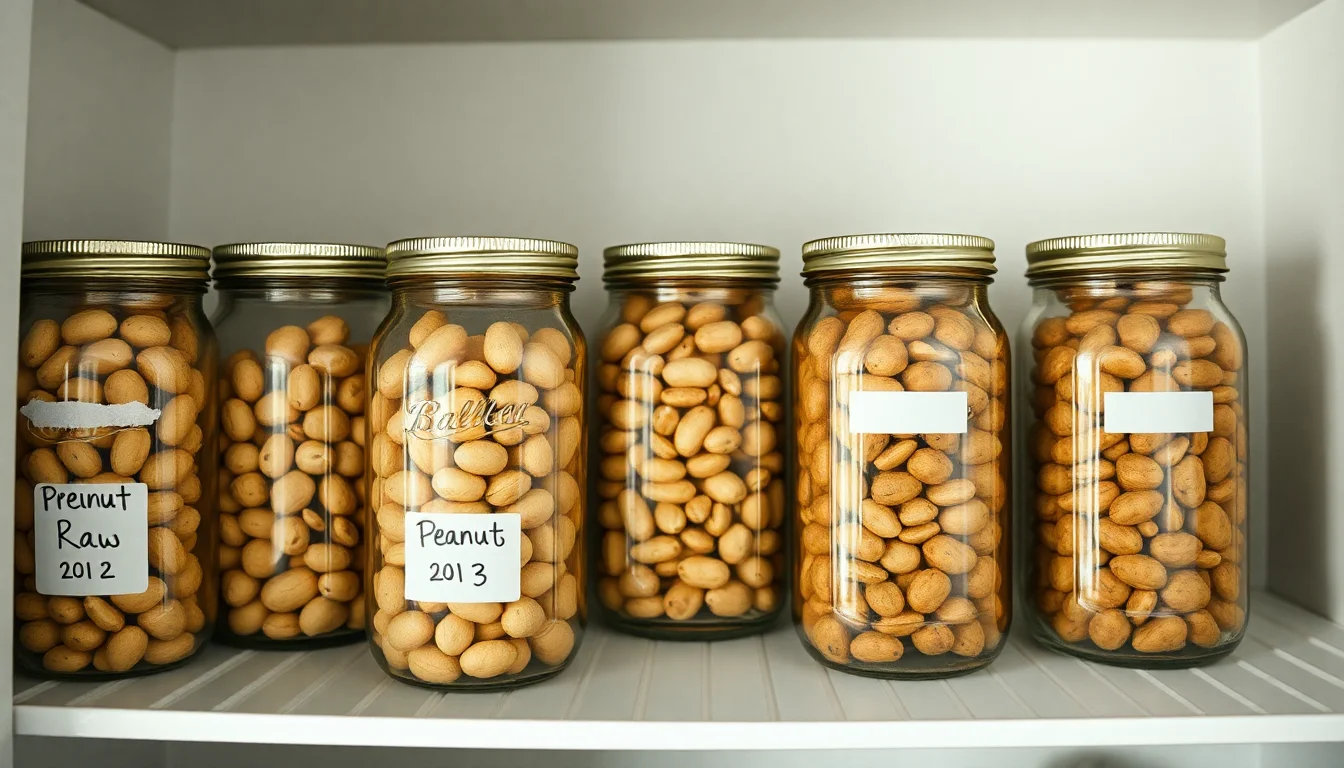

Here’s something nobody tells you when you buy peanuts in bulk for the first time: peanuts don’t last forever, and the way you store them makes a bigger difference than almost any other factor. I learned this after ordering a 25-pound bag of raw shelled peanuts (peanuts that have been removed from their outer shell but still have their thin reddish skin) for a brittle project, then getting distracted and leaving them in a paper bag in my pantry for three months. By the time I got back to the project, about a third of them had gone rancid — that sharp, bitter, almost paint-like smell that means the natural oils in the peanut have broken down and the nut is no longer good to eat. It was an avoidable, fifteen-dollar mistake, and I don’t want you to make it.
This guide covers exactly how long every common form of peanut stays fresh — in-shell, raw shelled, roasted, and peanut butter — depending on where you store them: pantry, refrigerator, or freezer. I’ll also tell you the warning signs that peanuts have turned, and what to buy if you want to extend their shelf life significantly. Whether you bought a small bag for a recipe or a big bulk order for a fundraiser or a small food business, the same rules apply — you just have more at stake with larger quantities.
Why Peanuts Go Bad (and Why It Matters More Than You Think)
Peanuts are roughly 50% fat by weight. That’s what makes them taste so rich and satisfying — and it’s also what makes them perishable. When fat is exposed to oxygen, heat, or light over time, it undergoes a chemical process called oxidation, which produces rancidity. You can think of it like a slow rust happening inside the nut.
The three enemies of peanut freshness are:
- Heat — warmth speeds up the oxidation process dramatically
- Oxygen — the chemical reaction requires it; less air means slower spoilage
- Light — UV exposure accelerates fat breakdown, especially in oils
This is why a can of dry-roasted peanuts sits fine on a shelf for months, but once you open it and leave it on the counter in a warm kitchen, it tastes stale within a few weeks. The processing (roasting, sealing, sometimes nitrogen-flushing the package) was doing work that your open bowl on the counter is not doing.
The good news: peanuts don’t “go bad” the way fresh meat or dairy does — there’s no bacterial spoilage danger in a typical scenario with properly dried peanuts. The risk is purely quality. Rancid peanuts won’t make you sick (in most cases), but they will taste terrible and ruin whatever you’re making.
One exception worth knowing: raw, undried peanuts — sometimes called green peanuts, the fresh-dug variety popular in the South for boiling — behave more like a vegetable than a shelf-stable nut. They have very high moisture content and can mold quickly. I’ll cover those separately below.
Shelf Life by Peanut Type: The Full Breakdown
Here’s the straightforward version. These ranges come from USDA Agricultural Research Service guidelines on peanut quality, cross-checked against StillTasty’s compiled food safety data and my own practical experience storing peanuts in bulk quantities.
By the Numbers
| Peanut Type | Pantry | Refrigerator | Freezer |
|---|---|---|---|
| In-shell, raw (dried) | 4–6 months | 6–9 months | Up to 12 months |
| Shelled, raw (dried) | 1–2 months | 3–4 months | 6–12 months |
| Roasted, in-shell | 3–4 months | 6 months | 12 months |
| Roasted, shelled (commercial bag) | 1–2 months (opened) / 6–9 months (sealed) | 3–4 months | Up to 12 months |
| Green/fresh peanuts (for boiling) | 1–2 weeks (unwashed) | 2–3 weeks | 3–6 months (blanched first) |
| Natural peanut butter (no stabilizers) | 1 month (opened) / 3 months (sealed) | 3–6 months | Up to 12 months |
| Commercial peanut butter (stabilized) | 3–4 months (opened) / 12 months (sealed) | Longer, but not required | Possible but rarely needed |
A few things to flag here:
In-shell peanuts last longest at room temperature. The shell acts as a natural barrier against oxygen and light — it’s nature’s packaging. If you bought in-shell peanuts for a party or a wedding peanut bar and have extras, keep them in a cool, dark spot (a pantry or cabinet, not a warm kitchen counter) and they’ll hold for months.
Raw shelled peanuts are your most time-sensitive purchase. Once the shell is off and the peanut is exposed, the clock runs fast. If you bought a 25-pound bag of raw Spanish peanuts (a smaller, rounder variety popular for brittle and boiling) for a big project, refrigerate or freeze what you won’t use within a month. I seal mine in zip-lock freezer bags with as much air pressed out as possible, label them with the date, and freeze them in smaller portions so I’m only thawing what I need.
“Best by” dates on commercial bags are for sealed, unopened product. Once you open that Hampton Farms bag or pour peanuts out of a bulk container, the clock resets to the opened timelines above — regardless of what the package says. The National Peanut Board notes that proper home storage after opening is one of the most overlooked factors in peanut quality.
How to Tell If Your Peanuts Have Gone Bad
You don’t need a lab test. Your nose is the best instrument here.
Smell them first. Good peanuts smell nutty, slightly earthy, and (if roasted) warm and toasty. Rancid peanuts smell sharp, bitter, almost like paint, old cooking oil, or crayons. If you’re getting that chemical bite in your nose, they’re done.
Then taste one. A single rancid peanut is unpleasantly obvious — a harsh, sour bitterness that lingers. If it tastes fine, it is fine.
Check for mold (usually a soft, fuzzy growth, often gray or green) on shelled peanuts that were stored in humid conditions. If you see mold on any portion, discard the whole batch — don’t try to sort around it. Certain molds that grow on peanuts can produce aflatoxins, naturally occurring toxins that are a genuine health concern, which is one reason the USDA monitors commercial peanut crops so carefully. Home-stored peanuts aren’t tested, so when in doubt, throw them out.
Soft or shriveled texture in a roasted peanut that was once crunchy usually means moisture got in — staleness, not rancidity, but still not pleasant. Those are the ones I toss into the backyard for the squirrels.
How to Store Peanuts for the Long Haul (Practical Gear Guide)
If you’re storing more than a few pounds — for a fundraiser, a wedding, a candy-making season, or a small business’s ingredient supply — it’s worth spending a few dollars on better storage. Here’s what actually works:
Airtight containers are the baseline minimum. A clip-top glass jar, a hard plastic food-grade container with a tight lid, or even a well-sealed zip-lock freezer bag beats a paper bag or an open bowl every time. The goal is reducing the peanuts’ contact with air.
Vacuum sealing is the serious upgrade. A home vacuum sealer (like the FoodSaver models widely available on Amazon) removes almost all the oxygen from the bag, which dramatically slows oxidation. I use mine for any bulk purchase I’m not going to go through in a month. Vacuum-sealed peanuts in the freezer can stay good for 12–18 months without meaningful quality loss, based on my own use and consistent with University of Georgia Extension guidance on dry goods storage.
Mylar bags + oxygen absorbers are what long-term preppers and bulk food operators use — and they genuinely work for multi-year storage when you’re buying a 50-pound sack. A 2,000cc oxygen absorber in a sealed mylar bag creates a nearly oxygen-free environment. This is overkill for most home cooks, but if you run a small baking or confectionery business buying peanuts by the case, it’s worth knowing about.
Food-grade 5-gallon buckets with gamma-seal lids are practical for anyone storing 10+ pounds at a time — a snack brand, a church fundraiser with a big bag left over, a granola maker. Buckets are stackable, rodent-resistant, and easy to label. The gamma-seal lid (a type of lid that screws on and off easily, unlike the standard pry-off style) makes repeated access practical.
A few affiliate picks worth bookmarking:
- FoodSaver V4840 2-in-1 Vacuum Sealer (Amazon) — the workhorse option I’ve used for years
- Mylar bags with oxygen absorbers (search Amazon for “1-gallon mylar bags with 300cc oxygen absorbers” — many solid options under $20 for a 50-pack)
- Gamma-seal bucket lids — available at most hardware stores and on Amazon; fit standard 5-gallon food-grade buckets
Quick Notes for Specific Use Cases
Fundraiser organizers: If you’re ordering peanuts in advance of an event, try to order no more than 4–6 weeks out, store bags in a cool, dry place (not a warm gym storage room), and keep them sealed until sale day. In-shell peanuts in their original sealed bags have the most buffer.
Wedding and event planners: In-shell roasted peanuts for a “peanut bar” are very forgiving — order 2–4 weeks out, store at room temperature, and you’re fine. Don’t refrigerate display peanuts; the moisture from a fridge can make shells go soft.
Brittle and candy makers: Raw shelled Spanish peanuts are your ingredient, and they’re the most perishable form. Buy as close to your production date as possible, or freeze in small batches and thaw only what you need per session.
Home peanut butter makers: Use raw peanuts within a month of purchase for best flavor, or freeze them and roast from frozen (just add 5 minutes to your roast time). Your finished peanut butter — no added stabilizers — belongs in the fridge once ground, and it’ll hold well there for up to 6 months per Virginia Cooperative Extension home preservation guidance.
What We’d Actually Buy for Storage
For most people reading this — a home cook, a fundraiser organizer, someone who just got a big bag from a bulk order — here’s the honest answer:
If you’re going through peanuts within a month, a good airtight container in a cool pantry is genuinely enough. Don’t overthink it.
If you bought more than you’ll use in a month, freeze the excess in a zip-lock freezer bag right now, before you forget. Label it with today’s date. Thaw overnight in the fridge when you need it. That’s the whole system.
If you’re buying 10+ pounds regularly for a business or serious home production, a vacuum sealer pays for itself in the first few months of not wasting product. It’s the single highest-leverage tool I own for dry ingredient storage.
Peanuts are one of those ingredients that reward a little attention. Take care of them, and they’ll take care of whatever you’re making.