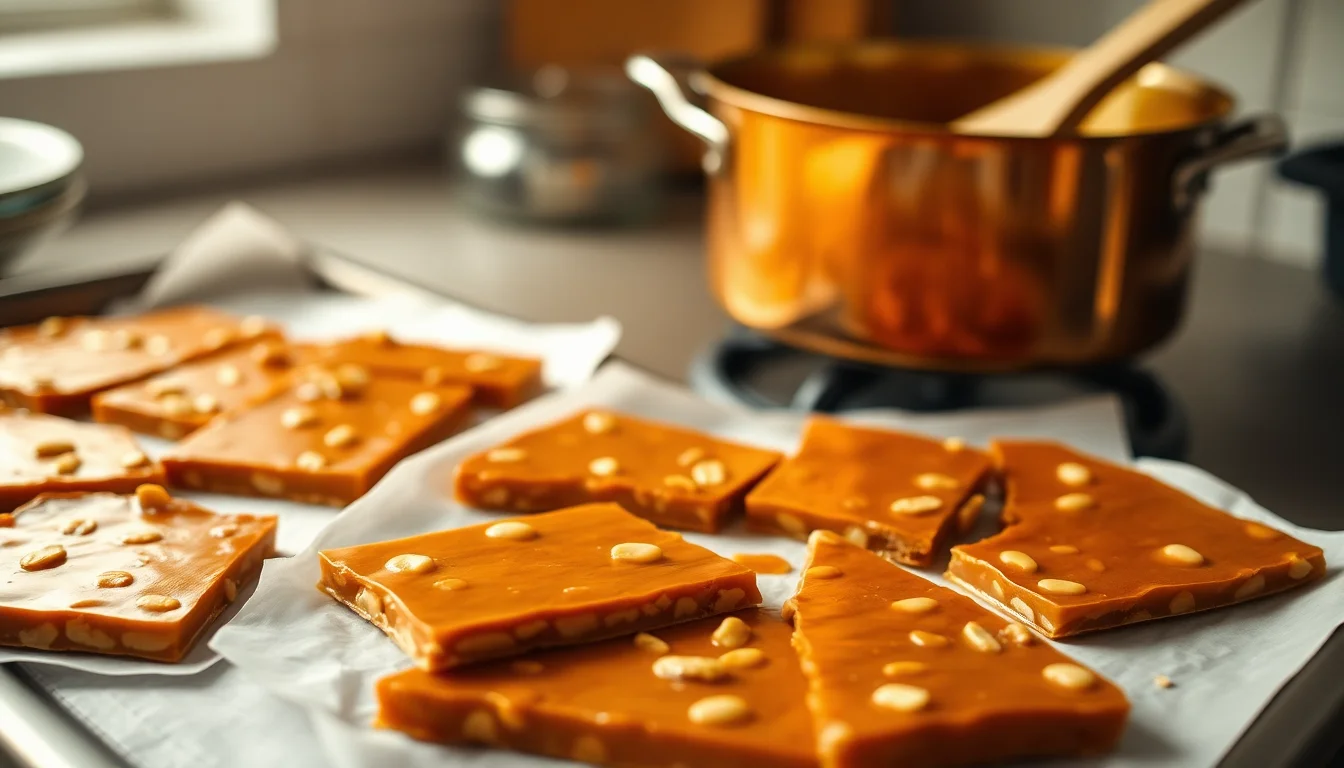

The Best Peanuts for Peanut Brittle (Tested in a Home Kitchen)
Peanut brittle sounds simple — sugar, corn syrup, butter, peanuts, a candy thermometer — but the peanut you pick makes or breaks the whole batch. I know this because I ruined two pounds of sugar on my first attempt using the wrong type, and ended up with brittle that tasted flat and chewy in the center. If you’re here because you want to make brittle for the holidays, a bake sale, or just because it’s one of the great American candies, you’re in the right place. This article will walk you through the three most common peanut types you’ll encounter when shopping, explain in plain English what each one actually is, and tell you which one to buy based on real side-by-side batches I made in my home kitchen.
No industry jargon without a definition, I promise. Let’s go.
Why the Type of Peanut Matters More Than You’d Think
Here’s something that surprised me when I first started making brittle seriously: peanuts aren’t all the same. There are four main commercial varieties grown in the U.S. — Spanish, Virginia, Runner, and Valencia — and they differ in size, oil content, flavor intensity, and how they behave under heat. For brittle specifically, two of those differences matter a lot.
Size affects texture. A smaller peanut distributes more evenly through the candy layer, so you get a little peanut in every bite. A larger peanut can be great, but if your brittle slab is thin, you end up with gaps.
Oil content affects flavor. Higher-fat peanuts taste richer and nuttier when they roast in the hot sugar. Lower-fat peanuts can taste bland once the sugar is doing all the talking.
Raw vs. roasted is a third variable people overlook. “Raw” means the peanut hasn’t been cooked yet — it still has its natural moisture. “Roasted” means it’s already been heat-processed. For brittle, you almost always want raw peanuts, because they’ll finish cooking in your hot sugar syrup. If you start with roasted peanuts, they’ll over-roast by the time your candy hits the right temperature (around 300°F, what candy makers call the “hard crack” stage — meaning the sugar is set firm enough to snap cleanly when cool).
The Three Contenders I Tested
I made five batches of brittle over two weekends in early 2026, using the same base recipe each time (2 cups sugar, 1 cup light corn syrup, ½ cup water, 2 cups peanuts, 2 tbsp butter, 1 tsp baking soda, 1 tsp vanilla). I changed only the peanut. Here’s what I used:
- Raw Spanish peanuts — small, round, reddish-skinned, high oil content
- Raw Virginia peanuts, redskin — large, oblong, the “cocktail peanut” you picture on an airplane
- Blanched Runner peanuts — medium-sized, uniform, skin already removed (that’s what “blanched” means — the papery red skin has been steamed or heat-removed)
The Winner: Raw Spanish Peanuts
Spanish peanuts are, in my experience and in the experience of most old-school candy makers, the traditional brittle peanut. They’re small — roughly half the size of a Virginia — so they tuck into the candy layer cleanly. More importantly, their oil content runs around 50–51%, which is higher than other types. That extra fat means they roast up deeply nutty and a little sweet on their own, which plays beautifully against caramelized sugar.
What the batch tasted like: Rich, snappy, deeply roasted-peanut flavor. The kind of brittle that makes people ask for the recipe. The peanuts distributed evenly across the slab with no big empty stretches. The skin stayed on (redskin Spanish), which added a very slight bitterness that cut the sugar perfectly — like a good salt-and-sweet balance, but coming from the peanut itself.
One note on skin-on vs. skinless Spanish: You can find both. For brittle, I prefer skin-on (sometimes labeled “redskin”). The skin adds color and a faint roasted note. If you or someone eating this has a sensitivity to peanut skins, skinless Spanish works fine — the flavor difference is minor.
By the Numbers: Spanish Peanut Brittle
| Batch variable | Result |
|---|---|
| Peanut size | Small (fits 2–3 per bite in thin brittle) |
| Oil content | ~50–51% (richest flavor under heat) |
| Cups needed per standard batch | 2 cups raw (≈ 10 oz / 280g) |
| Pounds needed for 3 lbs finished brittle | About 1 lb raw Spanish peanuts |
The Runner-Up: Raw Virginia Redskin Peanuts
Virginia peanuts are the big ones. If you’ve ever cracked open an in-shell roasted peanut at a ballpark or a Virginia roadside stand, that was likely a Virginia. They’re prized for snacking because of their size and crunch, and they do make beautiful brittle — just a different style of brittle.
What the batch tasted like: Big, impressive peanut pieces that almost crack independently from the candy, like a peanut cluster held together with brittle. The flavor was excellent — Virginias have good nuttiness — but slightly milder than the Spanish batch. The texture was chunkier, which some people love.
The catch: Because the pieces are large, you need to either rough-chop them (which I tried — it works) or accept that your brittle will be very thick in spots. Thin, even brittle is harder to achieve with full Virginia halves.
Best use case: If you want a “gourmet” or gift-box brittle with big impressive peanut pieces, Virginia redskins are a great pick. If you want the classic, even, snackable slab, go Spanish.
You can find raw Virginia redskin peanuts at Virginia Diner and Hampton Farms, both of which ship nationally and sell in sizes from 1-lb bags up to 25-lb cases.
The Budget Option: Blanched Runner Peanuts
Runner peanuts are the most widely grown peanut in the United States — they account for roughly 80% of U.S. peanut production — and they’re the default peanut in commercial peanut butter. When you buy a generic bag of “peanuts” at a grocery store, it’s almost certainly a Runner.
“Blanched” just means the red skin has been removed. You’re left with a pale, ivory-colored peanut that’s clean and uniform. No bitterness from the skin, very consistent size.
What the batch tasted like: Good. Honestly, quite good. Mild, clean peanut flavor. The brittle looked beautiful — pale gold with ivory peanuts, very uniform. But compared side by side with the Spanish batch, it was flatter. Less depth. It tasted like grocery-store peanut brittle, which isn’t a knock — that’s what most people grew up eating — but it didn’t have that roasted nuttiness that makes a batch memorable.
Where blanched Runners shine: They’re the right call if you’re making a large volume (a fundraiser, a bake sale, a holiday gift run of 50+ bags) and need consistency and economy. Blanched Runners are widely available in bulk — Hampton Farms sells them in 5-lb and 25-lb bags — and they’re usually the cheapest peanut per pound in this comparison.
They’re also the right pick if anyone eating your brittle dislikes the slight bitterness of peanut skins, or if you want a very clean, light-colored finished candy.
What to Actually Buy (Our Picks)
I don’t like to leave you with “it depends” as a final answer, so here’s the honest breakdown:
Our top pick for flavor: Raw Spanish peanuts, redskin This is what I’d buy if I were making brittle for a gift, a party, or any situation where I wanted someone to say “wow, what’s in this?” Look for them labeled “raw Spanish peanuts” or “raw redskin Spanish.” Avoid anything pre-roasted. In May 2026, you can find 5-lb bags on Amazon (search “raw Spanish peanuts” — look for Hampton Farms or Commodities America brands) for roughly $12–$16 shipped, which is plenty for 4–5 batches of brittle. Aldridge Peanuts and Whitley’s also carry them if you want to buy from a specialty peanut house.
Our budget pick for volume: Blanched Runner peanuts If you’re making brittle in quantity — a church fundraiser, a holiday bake sale, or stocking up — blanched Runners are the move. Consistent, inexpensive, widely available. A 25-lb bag from Hampton Farms runs in the $45–$55 range as of this writing, which works out to under $2.50/lb. For a standard 2-cup-per-batch recipe, that’s a lot of batches.
Our upgrade pick for presentation: Raw Virginia redskin halves For a premium gift tin or a wedding favor batch where you want people to see impressive peanut pieces in the candy, rough-chop raw Virginia halves and use them. You’ll pay more per pound ($4–$6/lb retail), but one batch of this brittle wrapped in parchment in a kraft box looks like it came from a specialty candy shop.
A Few Things I’d Tell My Earlier Self
Don’t use salted roasted peanuts. This is the most common brittle mistake. The peanuts overcook in the sugar, and the added salt is unpredictable. Always start raw, always salt yourself if you want salt (add it with the baking soda at the end).
Two cups of peanuts weighs about 10 ounces. Standard brittle recipes call for volume, not weight, but peanuts vary. Spanish peanuts are denser than Virginias. Weigh if you can — it makes replication easier.
The USDA grades peanuts by size, moisture, and damage. You don’t need to know the grading system to buy good brittle peanuts, but it’s worth knowing that “fancy” grade means fewer broken or damaged nuts — better visual result in finished candy. Most retail-packaged peanuts you’ll find online are already a decent grade. Where it matters more is if you’re ever buying a 25-lb bulk case — ask if it’s “fancy” or “No. 1” grade.
Fresh crop matters a little. Peanuts harvested in fall (August–October) and sold that winter/spring have the best flavor. NC State Extension notes that oil quality and flavor peak in fresh-crop nuts. If you’re buying in spring or summer and the bag has a recent pack date, you’re in good shape. Old stock from a previous season isn’t dangerous — it just tastes a little more flat.
Here’s What We’d Actually Buy
For most people reading this — one or two batches for a holiday, a bake sale, or because you found your grandmother’s recipe card — a 5-lb bag of raw redskin Spanish peanuts is the answer. It’ll cost you around $12–$15, give you enough peanuts for four or five full batches, and produce brittle that genuinely tastes like something special. Start there. Once you’ve made two or three batches and have a feel for it, you’ll know whether you want to experiment with Virginias for texture or Runners for volume.
If you want to go deeper on the actual cooking process, check out our How to Roast Peanuts at Home guide for background on how heat affects peanut flavor — it’ll make you a better brittle maker too. And if you’re calculating how many pounds to buy for a large batch or a gift-giving run, our Brittle Pound Calculator will do the math for you.
Make a test batch this weekend. You’ll be glad you did.